
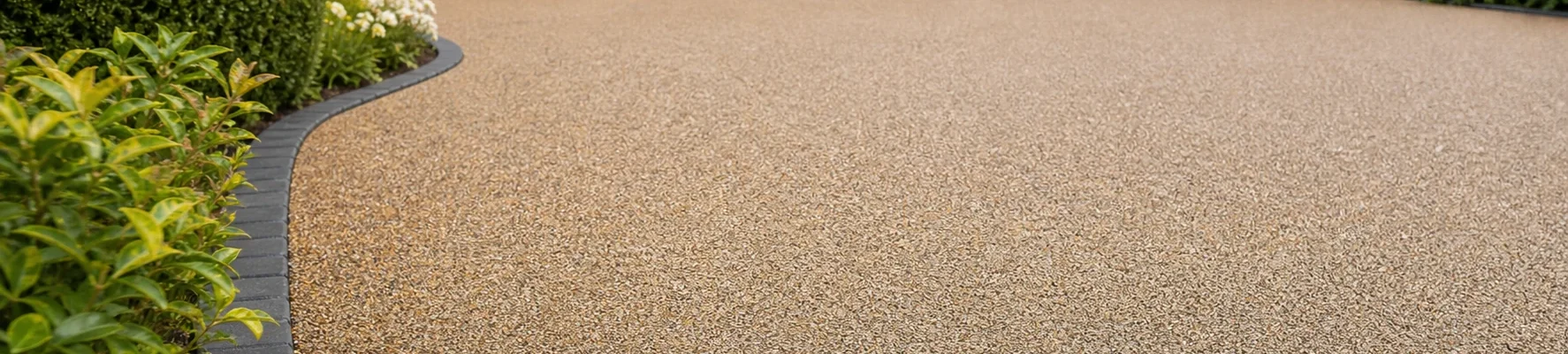
A resin driveway colour sample can look perfect in your hand, then slightly different once it is viewed outside. That does not mean the sample is wrong. It usually means the surface is reacting to light, scale and its surroundings.
Understanding why this happens helps you choose with more confidence. Resin bound surfaces are made from natural aggregates, so colour is not a flat paint finish. It has texture, depth and variation, which is part of what makes it attractive.
Natural aggregate is not a single flat colour
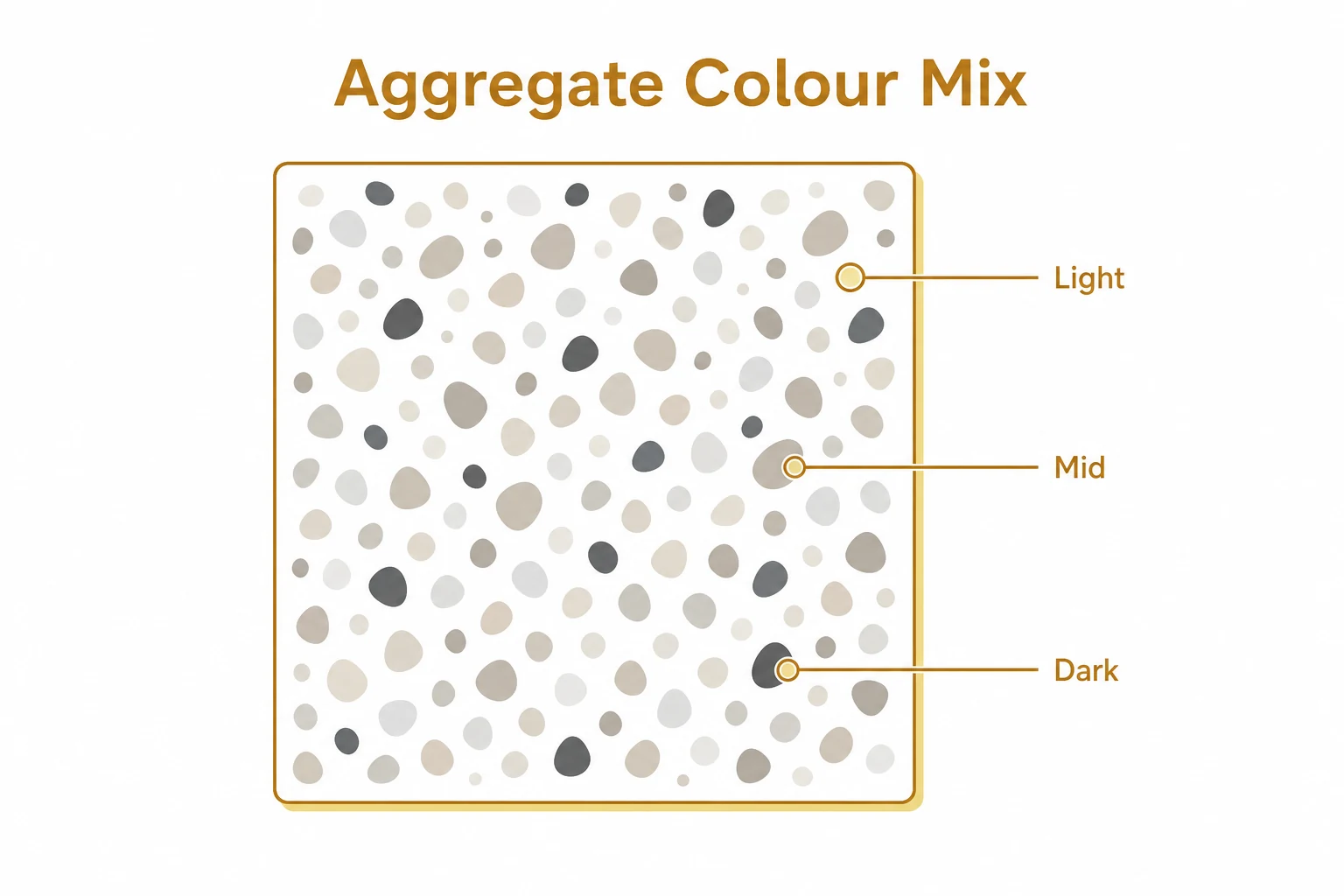
Most resin bound driveway colours are created by blending small natural stones with clear resin. The finished surface takes its appearance from the aggregate, not from a coloured coating on top. That means every blend contains a mix of tones, flecks and particle sizes.
A small sample may only show part of that blend. You might notice a few lighter stones, darker grains or warmer particles more strongly because the area is compact. Once the same material is installed across a full driveway, the colour usually reads as a more balanced overall tone.
This is why it is useful to look at samples as a guide rather than as an exact promise of every individual stone. A blend with cream, buff and golden particles may feel pale in one sample and warmer in another. A grey blend may show silver, charcoal and soft beige notes depending on which stones are most visible.
If you are comparing options, view several samples together and step back from them. Close inspection helps you see detail, but standing back gives you a better sense of the colour your eye will read from the driveway as a whole. For a broader view of available blends, the resin driveway colour options page is a sensible place to compare finishes before narrowing your choice.
Outdoor light changes the way colour is perceived
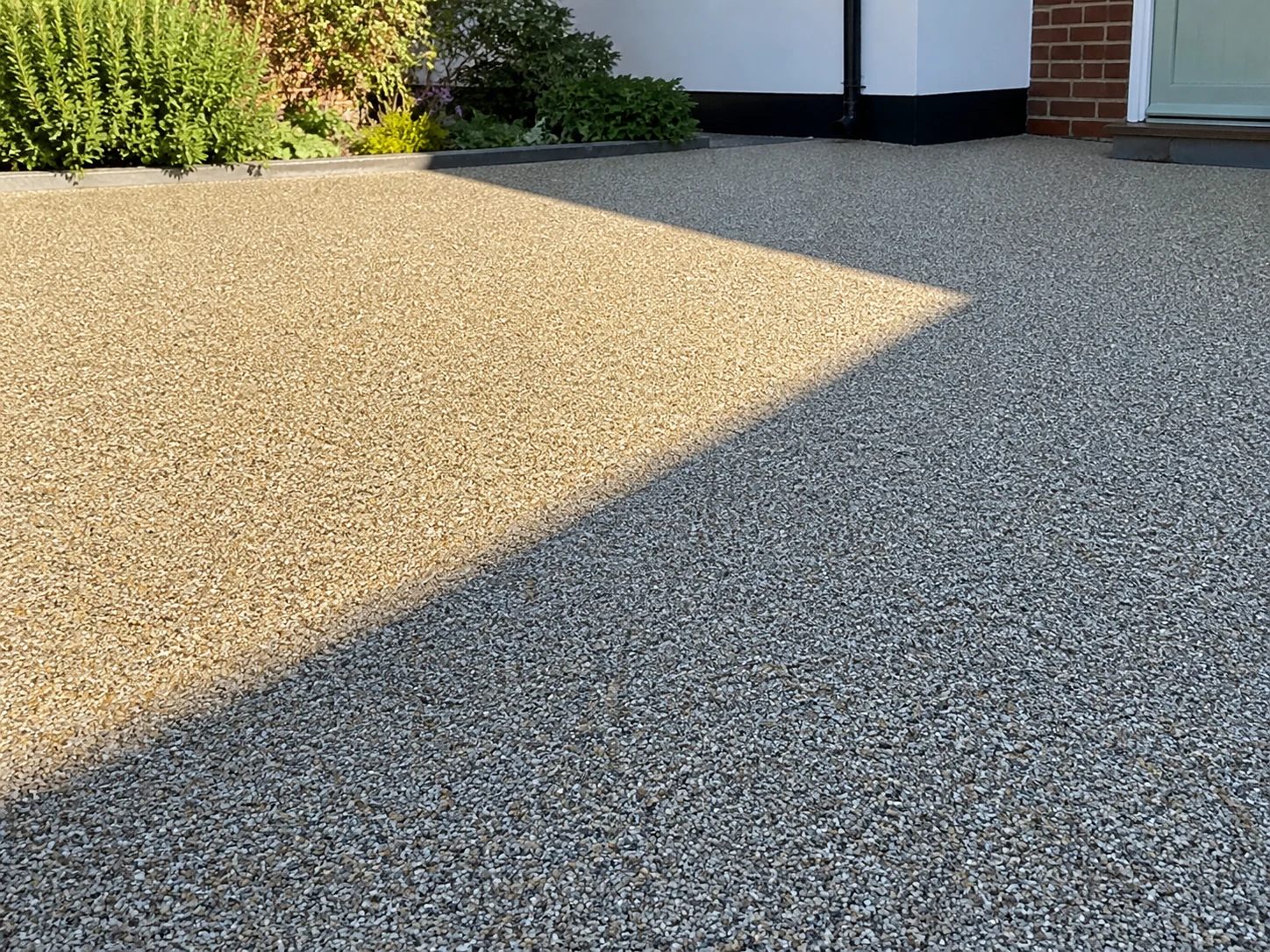
Light is one of the biggest reasons resin driveway samples look different outdoors. A sample viewed indoors under warm bulbs, cool lamps or shaded windows will not behave in the same way as it does outside.
Bright direct light can make pale aggregates look cleaner and more reflective. It can also make darker blends show more contrast between individual stones. In softer daylight, the same sample may look calmer and more muted. In shade, warm blends can appear deeper, while grey blends may look cooler.
The time of day matters too. Morning and evening light can add warmth, while midday light can make colours appear clearer and sharper. On overcast days, shadows are softer, so the sample may look more even. None of these readings is the only true colour. They are all normal ways the surface can appear once installed.
A good practical test is to place samples where the driveway will actually sit. Check them in direct light, in shade and near the entrance to the property. Do not make the decision from a single glance. A finish that looks slightly strong in one light may be exactly right across a larger area, especially once edging, planting and nearby surfaces are considered.
Wet and dry surfaces can look noticeably different
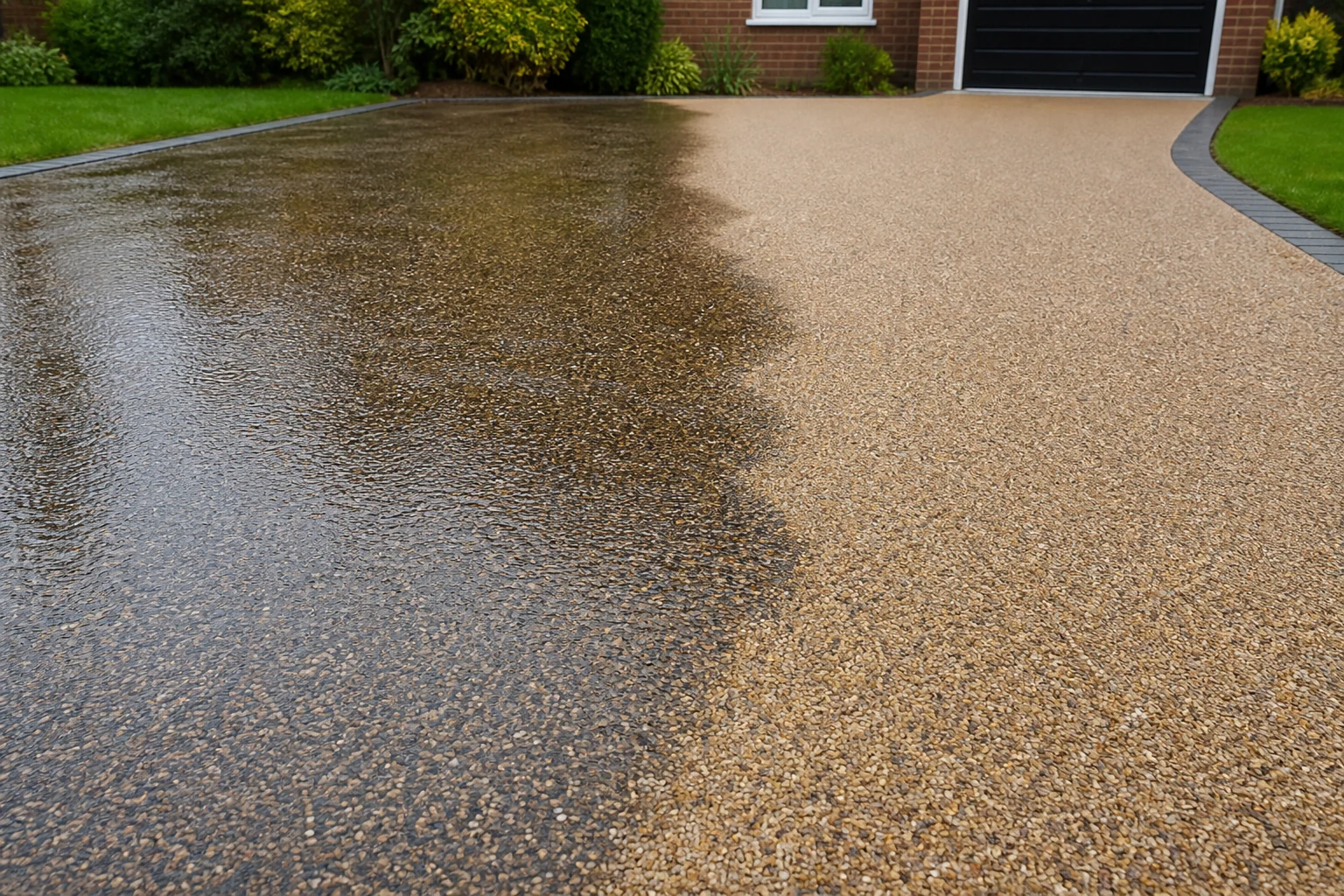
Resin bound aggregate usually looks richer when wet. Rain or washing can deepen the colour, increase contrast and make the stone look glossier for a while. When dry, the same driveway will normally look softer and more settled.
This is not a defect. It is the same effect you see when natural stone, gravel or paving becomes wet. Moisture changes how light reflects from the surface, so individual stones can appear darker or more defined. Some homeowners prefer the richer wet look, while others prefer the lighter dry appearance.
When choosing a colour, it helps to view the sample both ways. Look at it dry first, then dampen it lightly with clean water and let it settle. This gives you a realistic idea of the range of appearances the driveway may have during ordinary use.
Maintenance can also influence how fresh the colour appears over time. Regular sweeping and sensible cleaning help prevent dirt from dulling the surface. If you want practical advice after installation, the guide on how to clean resin driveways explains simple ways to keep the finish looking cared for.
Surrounding materials affect the final choice
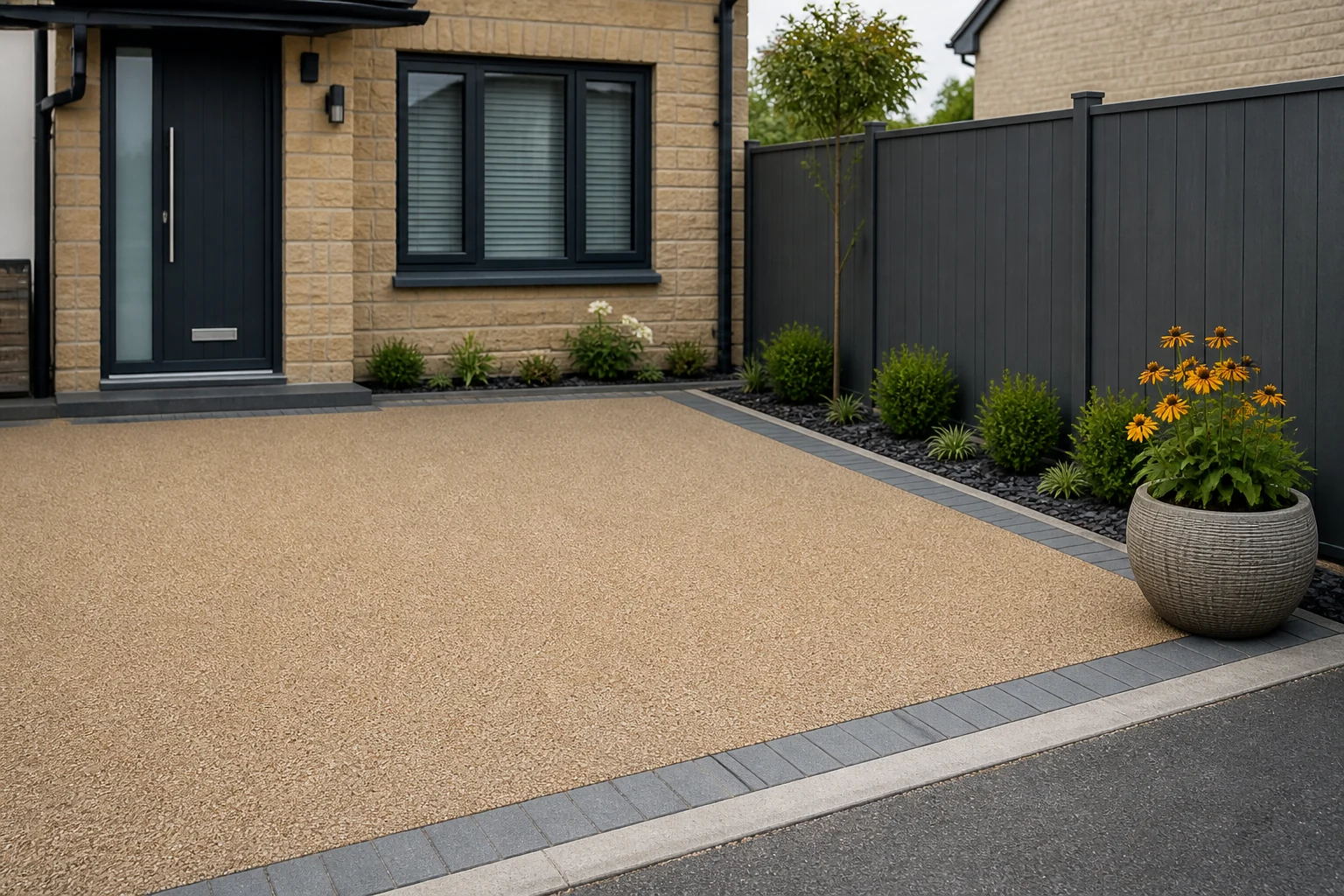
A resin sample does not sit in isolation once it is installed. It is seen beside brickwork, render, walls, fencing, paving, planting, garage doors and kerbs. These surrounding materials can change how the colour feels.
For example, a warm aggregate may look subtle beside similar warm brickwork, but more golden beside cool grey paving. A dark grey blend may look smart and defined beside pale walls, but stronger beside already dark materials. A light neutral blend may brighten an entrance, while a mid tone blend can feel more forgiving where there is regular foot traffic.
This is why matching is not always the aim. Sometimes a gentle contrast gives a cleaner result than trying to find the exact same colour as the house exterior. A driveway that is slightly lighter, darker or warmer than nearby materials can frame the entrance more naturally.
Edges matter as well. Block borders, setts and contrasting trims can make the main resin colour appear lighter or darker by comparison. If you are weighing up different surface types, the comparison of block paving and resin bound driveways gives helpful context on how each option performs and looks as a finished driveway.
Sample size and viewing distance matter
A small colour sample is useful, but it cannot fully recreate the scale of a completed driveway. On a small board, every stone is close to your eye. On a full surface, your view blends thousands of stones into one overall impression.
This is why a sample can feel busy up close, then calm and even when imagined across a larger area. Speckled blends often look more textured in your hand than they do from the pavement or from inside the house. Darker blends can look dramatic as a sample, but measured and tidy once spread across a wider space with clean edges.
Try placing the sample on the ground and standing at different distances. Look from the front door, from the pavement and from where vehicles will usually be parked. These viewpoints are more useful than judging it only at tabletop distance.
It also helps to compare no more than a few options at once. Too many similar samples can make the decision harder. Shortlist one light, one mid tone and one darker option, then test them in the actual setting. The right choice is usually the one that still looks good in several conditions, not just the one that wins indoors under perfect light.
How to choose a resin driveway colour confidently
The best colour choice usually comes from a simple process. Start with the overall feel you want. Some homeowners want a bright and open entrance. Others prefer a deeper, more defined finish. Some want a natural stone look that sits quietly with the property.
Next, think about everyday use. Very pale colours can look clean and spacious, while mid tone blends are often popular because they balance warmth, practicality and softness. Darker colours can give strong definition and pair well with crisp edging. There is no single best colour for every home, because the right answer depends on light, setting and personal preference.
Ask to see samples outside if possible, and take your time with them. A reliable installer should be comfortable discussing how each blend behaves in wet and dry conditions, how it may look beside existing materials and whether a border would improve the finished effect.
If you are still deciding whether resin is the right surface for your driveway, the article on why choose a resin bound driveway covers the broader benefits alongside appearance.
- Resin driveway colours come from natural aggregate blends, so small samples can show variation.
- Outdoor light, shade and time of day can all change how a colour appears.
- Wet resin bound surfaces often look richer and deeper than dry ones.
- Nearby brickwork, paving, fencing and edging can influence the final impression.
- View samples outside, on the ground and from several distances before choosing.
Frequently asked questions
Why does my resin driveway sample look darker outside?
It may be in shade, viewed against lighter surrounding materials or slightly damp. Natural aggregate also shows more depth outdoors, especially when the light catches different stones in the blend.
Will the installed driveway look exactly like the sample?
It should reflect the same blend, but a full driveway can look more balanced than a small sample. Natural stone varies, so the overall surface is best judged as a complete finish rather than by individual particles.
Should I choose a resin colour to match my brickwork?
Not always. A close match can work, but a gentle contrast often gives a cleaner result. The aim is to choose a colour that works with the whole entrance, including edging and nearby surfaces.
Is it better to view resin samples wet or dry?
Both are useful. Dry shows the everyday settled appearance, while wet shows how the surface may look after rain or cleaning. Comparing both helps avoid surprises.
Ready to compare resin colours?
If you are planning a resin driveway, First Impressions Yorkshire GA4 can help you compare suitable colour blends and choose a finish that feels right outside, not just on a sample board.