
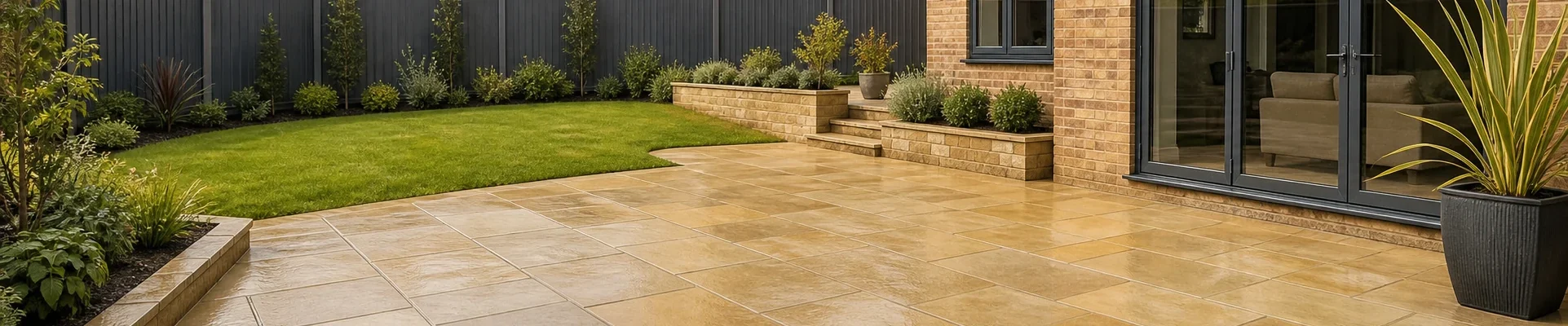
Indian stone can make a patio feel natural, solid and full of character, but the finished surface is only as good as the groundwork beneath it.
When a patio moves, dips, puddles or develops uneven joints, the issue often starts below the slabs. A properly prepared sub base gives Indian stone the support it needs to stay level, drain sensibly and cope with everyday use.
What the sub base actually does
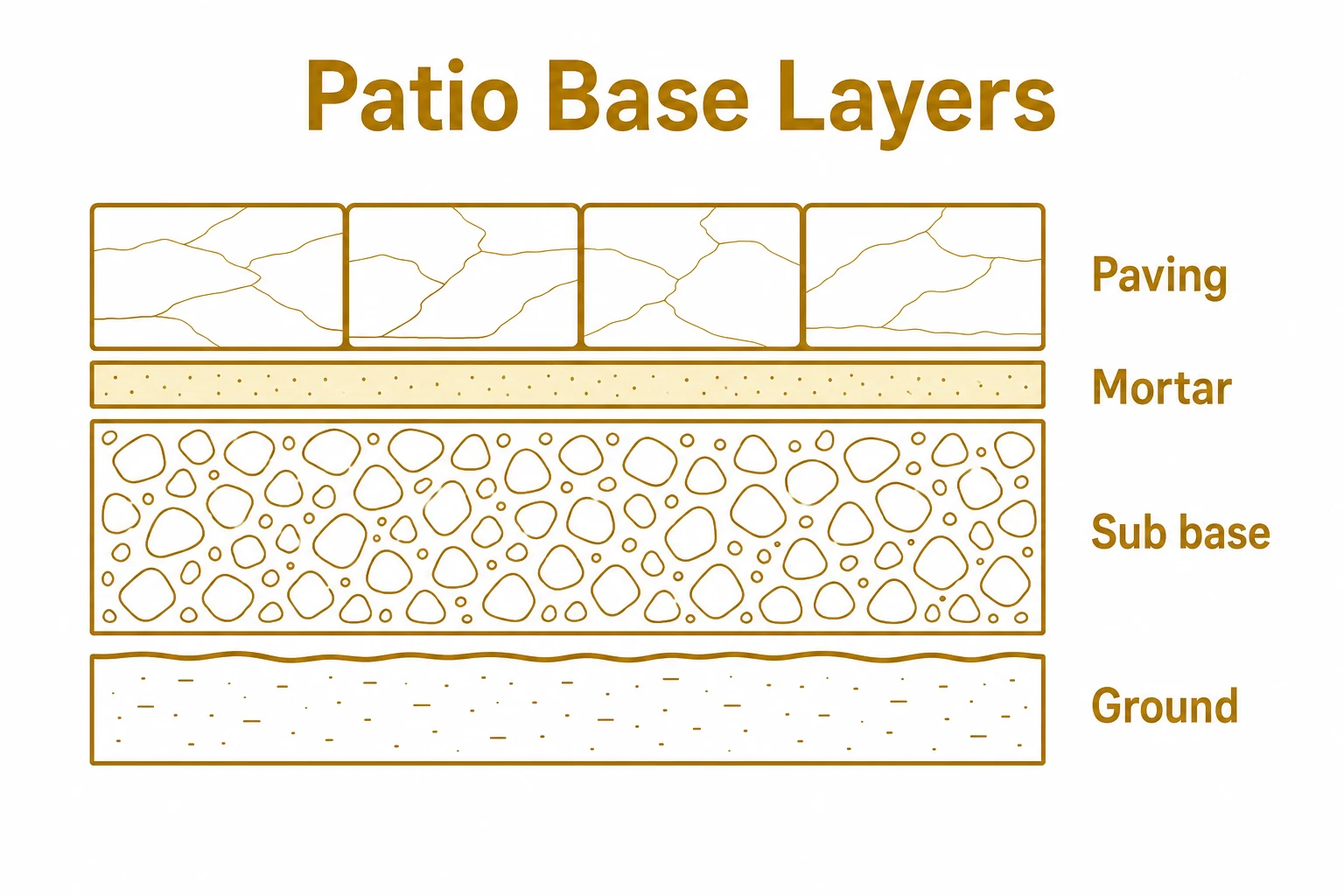
The sub base is the compacted foundation layer below the mortar bed and paving slabs. It spreads weight, supports the patio evenly and helps control how water moves through and around the paved area.
Indian stone is a natural material, so each slab can vary slightly in thickness, texture and shape. That is part of its appeal, but it also means the preparation has to be accurate. The sub base needs to be firm, even and suitable for the ground conditions before any slabs are laid.
Without a sound base, even carefully chosen stone can start to rock underfoot. Joints may crack, edges can loosen and low spots can appear where the patio has settled. These problems are frustrating because the surface may look finished at first, yet the weakness underneath shows itself later.
A professional installation treats the sub base as a key part of the patio, not a hidden detail. The ground is reduced to the right depth, soft patches are dealt with, suitable aggregate is installed and the area is compacted in layers. This creates a stable platform for the bedding layer and the Indian stone above it.
Why ground preparation affects movement
Patios are exposed to changing weather, foot traffic, furniture, planters and cleaning. The surface has to cope with all of this while staying steady. If the ground below is poorly prepared, the patio can begin to move as the soil settles or as water softens weaker areas.
Movement usually starts small. One corner of a slab may dip slightly, or a joint may begin to open. Over time, that movement can allow more water in, which makes the problem worse. Once slabs start rocking, the bedding beneath them can break down and the patio may lose its clean, even finish.
The right preparation reduces that risk. A compacted sub base gives the slabs consistent support across the whole patio. It also helps avoid pressure points, where one slab is supported well in one area but left weaker in another.
This matters especially with traditionally laid patios, where each slab is set into mortar and positioned carefully. The quality of the laying depends on the base beneath it. If you are comparing options for a new patio, the traditionally laid drives, paths, patios and paving service explains how this kind of surface fits into wider outdoor improvements.
Drainage, pooling and patio levels
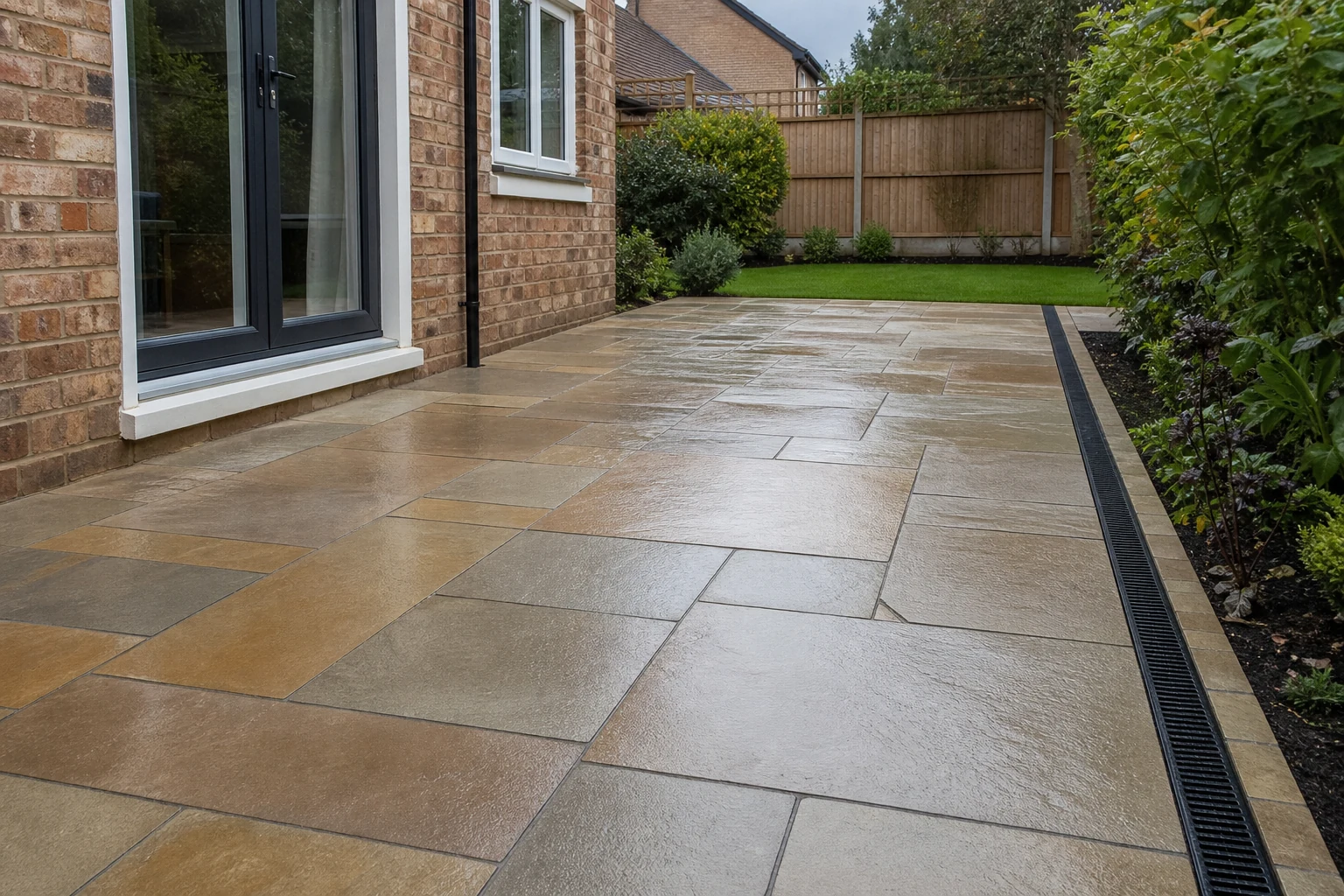
A good patio should not hold standing water in the wrong places. Some water after rain is normal for any outdoor surface, but persistent pooling often points to problems with levels, falls or the layers beneath the slabs.
The fall is the slight slope that guides water away from the house and towards an appropriate drainage route. It needs to be planned before the patio is laid, because it affects the excavation, the sub base and the finished slab levels. If the fall is too shallow, water can sit on the surface. If it is poorly directed, it can run towards walls, steps or lawn edges where it is not wanted.
The sub base also plays a role in drainage because it helps create a consistent structure below the mortar bed. If it is uneven or not properly compacted, shallow depressions can form. Those dips may not be obvious during installation, but they can become visible after rain.
Skilled installers think about the whole area, including thresholds, existing paths, garden levels and any nearby drainage. They avoid simply laying slabs to match whatever ground is already there. Instead, they create a surface that looks neat while also moving water sensibly.
If an existing patio already shows signs of pooling, rocking slabs or broken joints, it may be worth comparing the symptoms with common warning signs that a driveway or patio needs professional attention.
How skilled laying protects the edges and joints
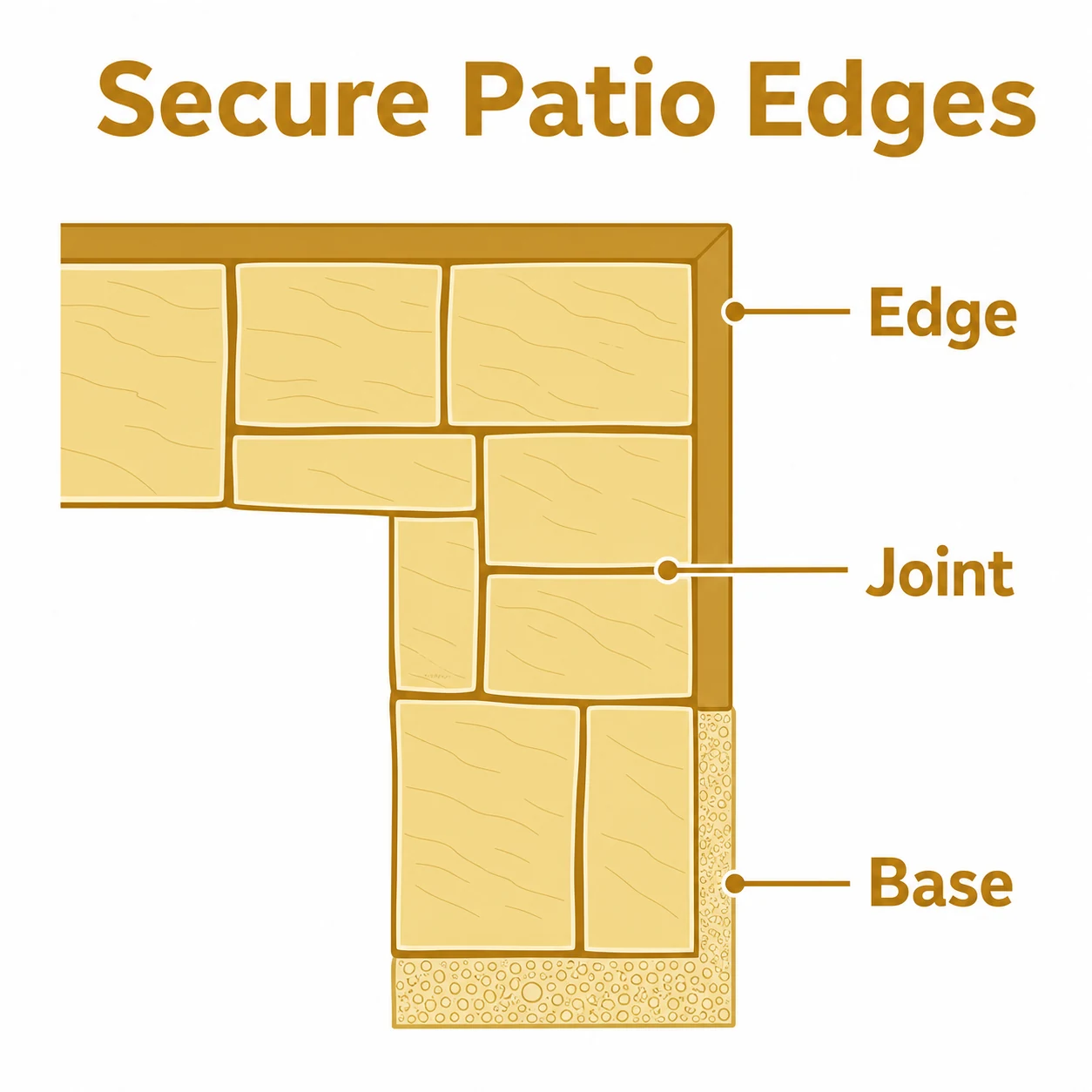
The edges of an Indian stone patio take more stress than many people realise. They define the shape of the area, meet lawns or borders and often sit close to steps, paths or planting beds. If the edges are not supported properly, they can loosen or spread over time.
A well built sub base helps the whole patio act as one stable surface. Edge restraints, correct bedding and careful pointing all work together with the foundation below. This is what keeps the patio looking tidy, with straight lines, secure perimeter slabs and consistent joints.
Joints matter too. They are not only decorative gaps between slabs. They help lock the surface together and reduce the chance of individual slabs moving independently. If the sub base is weak, the joints are more likely to crack because the slabs beneath them are shifting.
Indian stone also needs attention during laying because natural slabs are not always perfectly uniform. Installers need to adjust bedding depth, keep the surface level and maintain a natural pattern without creating awkward lips or trip points. Good workmanship is partly about what you see, but it is also about the steady preparation that makes those visible details last.
Why shortcuts are rarely worth it
It can be tempting to focus on the stone itself, because that is the part you see every day. The colour, size and layout are important, but they cannot compensate for weak preparation underneath.
Common shortcuts include not excavating deeply enough, using unsuitable material below the slabs, failing to compact the sub base properly or laying over unstable ground. These choices may save effort during installation, but they increase the risk of movement, unevenness and early repair work.
A proper installation is more measured. The installer checks the ground, plans the levels, prepares the foundation and lays the slabs with enough care to suit the material. That process helps the patio feel solid underfoot and gives the pointing and edges a better chance of staying intact.
It also makes the finished area easier to live with. Furniture sits more evenly, water behaves more predictably and the patio feels like a permanent part of the garden rather than a surface placed on top of it.
What to expect from a properly prepared Indian stone patio
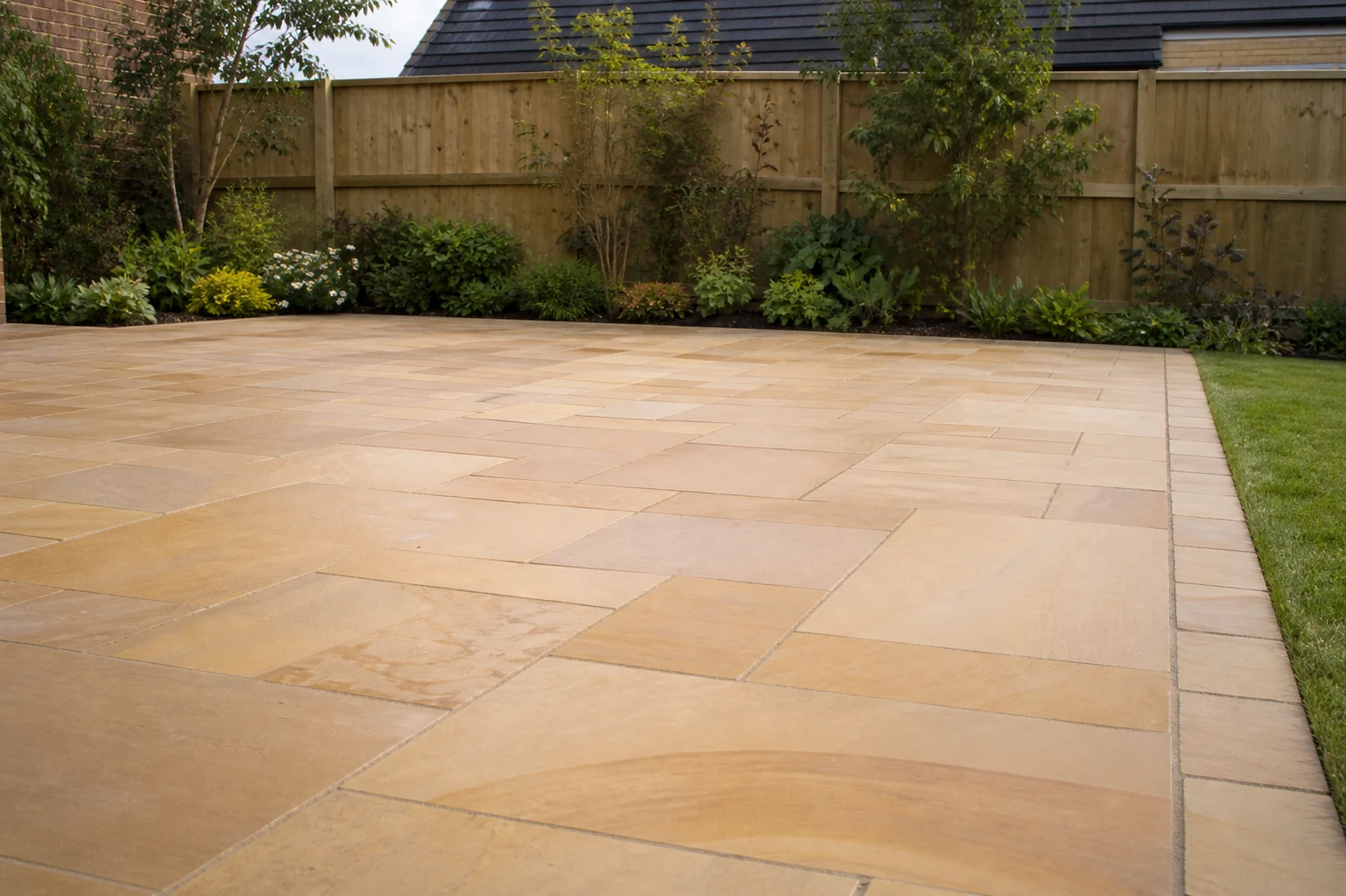
A well prepared Indian stone patio should feel stable, drain sensibly and sit neatly against the surrounding garden features. The slabs should not rock when walked on, and the joints should look purposeful rather than uneven or forced.
You should expect clear planning before work begins. That includes discussion of the intended use of the patio, the surrounding ground levels, access, drainage and how the paved area will meet existing paths, walls, lawns or planting. These details shape the preparation as much as the choice of stone does.
For homeowners thinking about wider surface choices, it can also help to understand how patios, driveways and paths differ in structure and use. This guide to choosing the right surface for your driveway or outdoor area gives useful context on matching materials to the job they need to do.
The best results come from treating Indian stone as a complete system, with excavation, sub base, bedding, laying pattern, pointing and drainage all working together. When each stage is handled properly, the patio has the strength beneath the surface to support the finish above it.
- The sub base spreads weight and gives Indian stone slabs consistent support.
- Good ground preparation helps prevent rocking slabs, cracked joints and uneven edges.
- Correct levels and falls reduce the chance of unwanted standing water.
- Natural stone needs skilled laying because slab thickness and shape can vary.
- A patio that is built properly below the surface is easier to use, maintain and enjoy.
Frequently asked questions
How deep should the sub base be for an Indian stone patio?
The right depth depends on the ground conditions, the intended use of the patio and the overall build up. A professional installer will assess the site, excavate to a suitable depth and compact the sub base properly before laying the slabs.
Can Indian stone be laid straight onto soil?
No. Soil is not a reliable base for Indian stone because it can move, soften and settle. A patio needs a prepared foundation with suitable compacted material and a proper bedding layer.
Why is my Indian stone patio holding water?
Pooling can be caused by poor falls, uneven settlement, low spots in the laying bed or drainage that has not been planned well. The surface and the layers beneath it need to work together to guide water away sensibly.
Do loose patio slabs always mean the whole patio needs replacing?
Not always. A small local issue may be repairable, but repeated movement usually points to a problem with support, drainage or preparation. It is best to have the cause checked before more slabs become affected.
Planning an Indian stone patio?
First Impressions Yorkshire can help with practical advice and skilled installation, from ground preparation to the finished surface.