

When people compare resin driveway samples, colour often gets most of the attention. Yet the size of the aggregate can change the way that colour looks once it is spread across a full driveway.
Aggregate size affects texture, shadow, grip, detail and how busy or calm the finished surface feels. Understanding it helps you choose with more confidence, especially when you are comparing samples for a real home rather than looking at a small piece in isolation.
What aggregate size means in a resin driveway

In a resin bound driveway, natural stone aggregate is mixed with a clear resin and trowelled onto a prepared surface. The aggregate is the small stone that gives the driveway its colour, texture and character. Size refers to the grading of those stones, usually within a selected range rather than every stone being identical.
A smaller aggregate gives a tighter and more detailed finish. The surface can look smoother because the stones sit closer together and the gaps between them are finer. A larger aggregate can create more texture and a stronger sense of individual stone pieces. Both can look smart when installed well, but they do not create the same visual effect.
This is why two resin samples in a similar colour blend can feel different when viewed side by side. One may look neat and refined, while the other may look more textured and varied. Neither is automatically better. The right choice depends on the property, the surrounding materials and the finish you want to see every day.
If you are at the colour selection stage, it is useful to compare aggregate size alongside shade and blend. The resin driveway colour options give a starting point, but the finished appearance is shaped by both colour and stone grading.
Why smaller aggregate can make a finish look finer
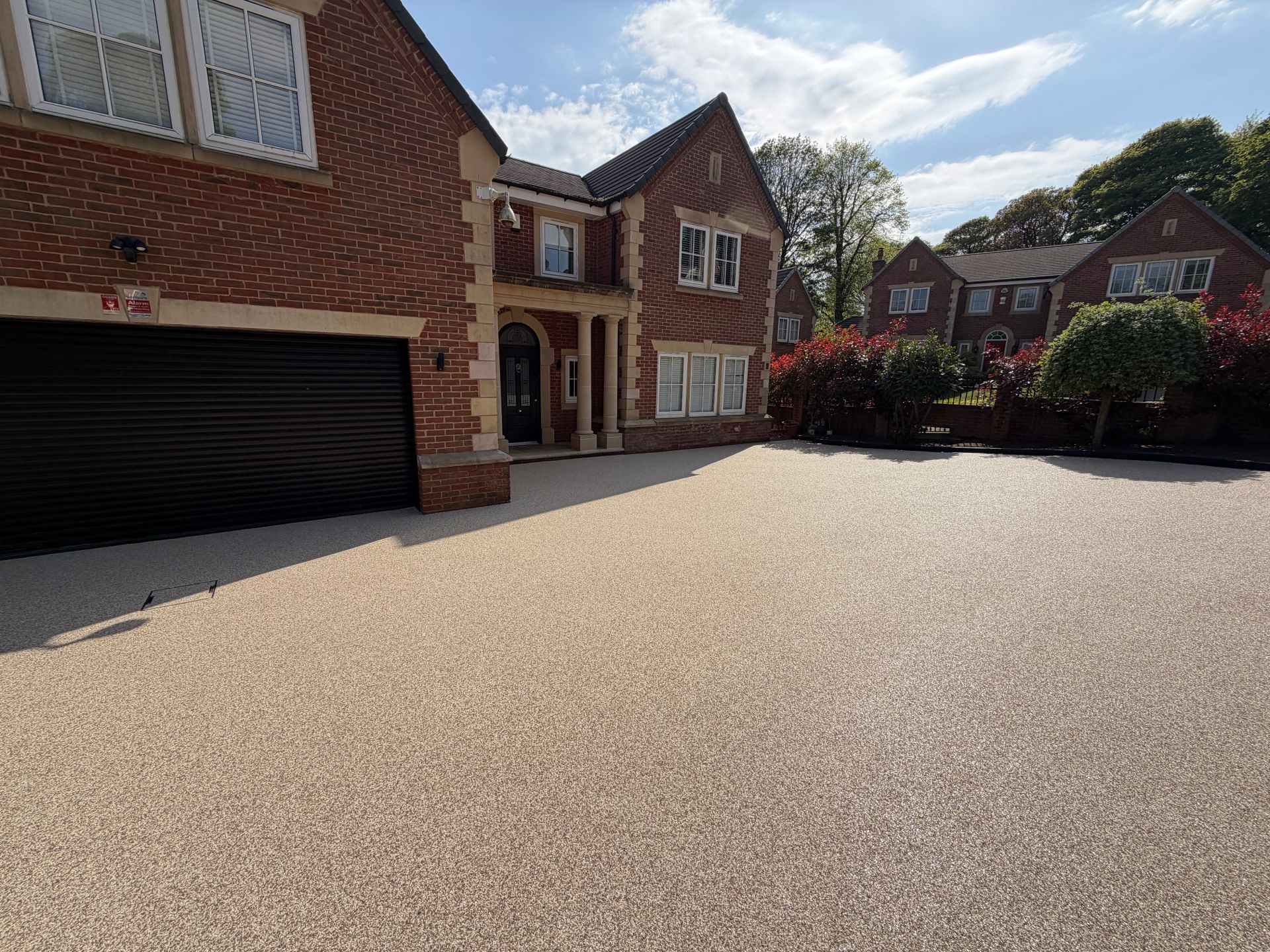
Smaller aggregate tends to create a closer, more even surface pattern. Because the pieces are compact, the eye reads the driveway as one continuous finish rather than a collection of larger individual stones. This can suit homeowners who want a clean and understated appearance.
A fine aggregate can also make colour blends appear more consistent. When the stones are smaller, the different tones in the mix are spread more frequently across the surface. From a normal viewing distance, this can soften contrast and reduce the sense of movement in the driveway.
That does not mean smaller aggregate always looks plain. It can still show plenty of natural variation, especially in blends that contain a mix of light, medium and darker stones. The difference is that the variation is usually more delicate. It is often a good option where the driveway needs to sit quietly alongside existing brickwork, paving, fencing or planting.
There is also a practical visual point. A driveway is not usually judged from one position. You see it from the pavement, from the front door, from upstairs windows and when pulling onto it in a vehicle. Smaller aggregate often holds a tidy appearance across all those viewing angles because the texture is less dominant.
Why larger aggregate can look more textured
Larger aggregate gives the surface more visible grain. The individual stones are easier to notice, which can make the driveway feel more natural and tactile. For some properties, that extra texture adds depth and stops a broad resin area from looking too flat.
Because larger stones create more visible edges and tiny shadows, the same colour blend can look a little stronger than it does in a smaller grading. A mixed blend may show more contrast because each piece has more visual presence. This can be attractive when the aim is to give the driveway a more defined character.
The main thing is to judge larger aggregate at the right scale. A sample held in your hand can make the texture feel more pronounced than it will across a driveway. Equally, a tiny sample may not show how the blend will read when repeated over a larger area. Step back from samples, view them in outdoor light and consider how the texture will sit next to the existing materials around the property.
If you are comparing resin with other driveway choices, texture is one of the points worth thinking about. A resin surface has a different look and feel from block paving, loose gravel or paving slabs, and that difference is discussed more broadly in block paving and resin bound driveway comparisons.
How aggregate size affects colour perception

Colour is not only about the stones themselves. It is also about how light hits the surface, how shadows form between stones and how the blend is viewed from different distances. Aggregate size changes all of those things.
With smaller aggregate, the colour can look more blended because there are more stone faces within the same area. This can make a mixed tone feel balanced and calm. With larger aggregate, the eye can pick out individual stones more easily, so the same blend may appear more varied.
Outdoor light matters too. A sample viewed indoors can look different when taken outside. Bright light, dull weather, shade and wet conditions can all change the way resin colours appear. This is why samples should be checked in the place where the driveway will actually be seen. The useful question is not just whether you like the sample, but whether you like it against the surrounding property materials.
For a deeper look at this part of the decision, the guide on why resin driveway colour samples look different outside explains why sample viewing conditions can alter your impression of a finish.
Choosing the right aggregate size for your home
The best aggregate size is usually the one that supports the overall design rather than competing with it. A driveway has to work with doors, walls, boundary fencing, garden edges, paths and any existing paving. If several of those features already have strong pattern or texture, a finer resin finish may help keep the frontage settled. If the surrounding materials are simpler, a more textured aggregate can add interest.
It is also worth thinking about the size of the driveway. On a smaller area, a heavily textured blend may feel more noticeable because you view it close up. On a larger area, a very fine and quiet blend may create a more uniform look. There is no single rule, but scale changes how pattern is perceived.
Homeowners should also consider edges and transitions. Resin driveways often meet drains, paving, door thresholds, planted borders or other hard surfaces. A good finish should look intentional at those points. Aggregate size can influence how crisp or textured those transitions feel, so it should be part of the design conversation rather than an afterthought.
The most reliable approach is to compare samples outdoors, look at them from different distances and imagine the whole driveway, not just the sample square. A professional installer can also explain which sizes are suitable for the specification of the project, because the visual preference still needs to sit within a sound installation method.
Questions to ask before making a final sample choice

Before choosing, it helps to slow the decision down and ask practical questions. Does the sample look right in shade as well as brighter conditions? Does the texture feel in proportion with the property? Does the colour blend complement nearby hard landscaping? Does it still appeal when viewed from a few steps back?
You should also ask how the selected aggregate size will work with the intended use of the driveway. The surface needs to look good, but it also needs to be appropriate for daily foot traffic, vehicle movement and the way the area is maintained. A good installer will balance appearance with the correct build up and finish.
Maintenance is another part of the picture. Resin surfaces are designed to be practical, but any driveway benefits from sensible care. If you want to understand ongoing upkeep before choosing a finish, the advice on specialist resin driveway cleaning is useful background.
A final sample decision should feel calm rather than rushed. If two options are close, view them again on a different day and at a different time. Small differences in aggregate size and colour can become clearer once you stop looking at the sample as a product and start looking at it as part of the property.
- Aggregate size changes how smooth, textured, calm or detailed a resin driveway appears.
- Smaller aggregate usually creates a finer and more blended visual finish.
- Larger aggregate can show more stone texture, contrast and surface character.
- Samples should be viewed outdoors, from different distances and beside nearby materials.
- The best choice balances appearance, scale, installation suitability and maintenance.
Frequently asked questions
Does smaller aggregate always look better on a resin driveway?
No. Smaller aggregate can look refined and even, but larger aggregate can add texture and natural variation. The better option depends on the property, the chosen colour blend and the look you want.
Can aggregate size make a resin colour look darker or lighter?
It can change the way the colour is perceived. Larger stones can create more visible texture and shadow, while smaller stones can make the blend look more even. Light conditions also play a big part.
Should I choose resin colour before aggregate size?
It is better to consider them together. Colour and aggregate size work as a pair, so a blend you like in one grading may feel different in another.
Is a sample enough to choose the final finish?
A sample is very useful, but it should be viewed outdoors and from more than one distance. The full driveway will be seen at a larger scale, so context matters.
Talk through your resin finish options
If you are comparing resin samples and want a finish that suits the property as a whole, First Impressions Yorkshire can help you weigh up colour, texture and aggregate size before the final choice is made.